
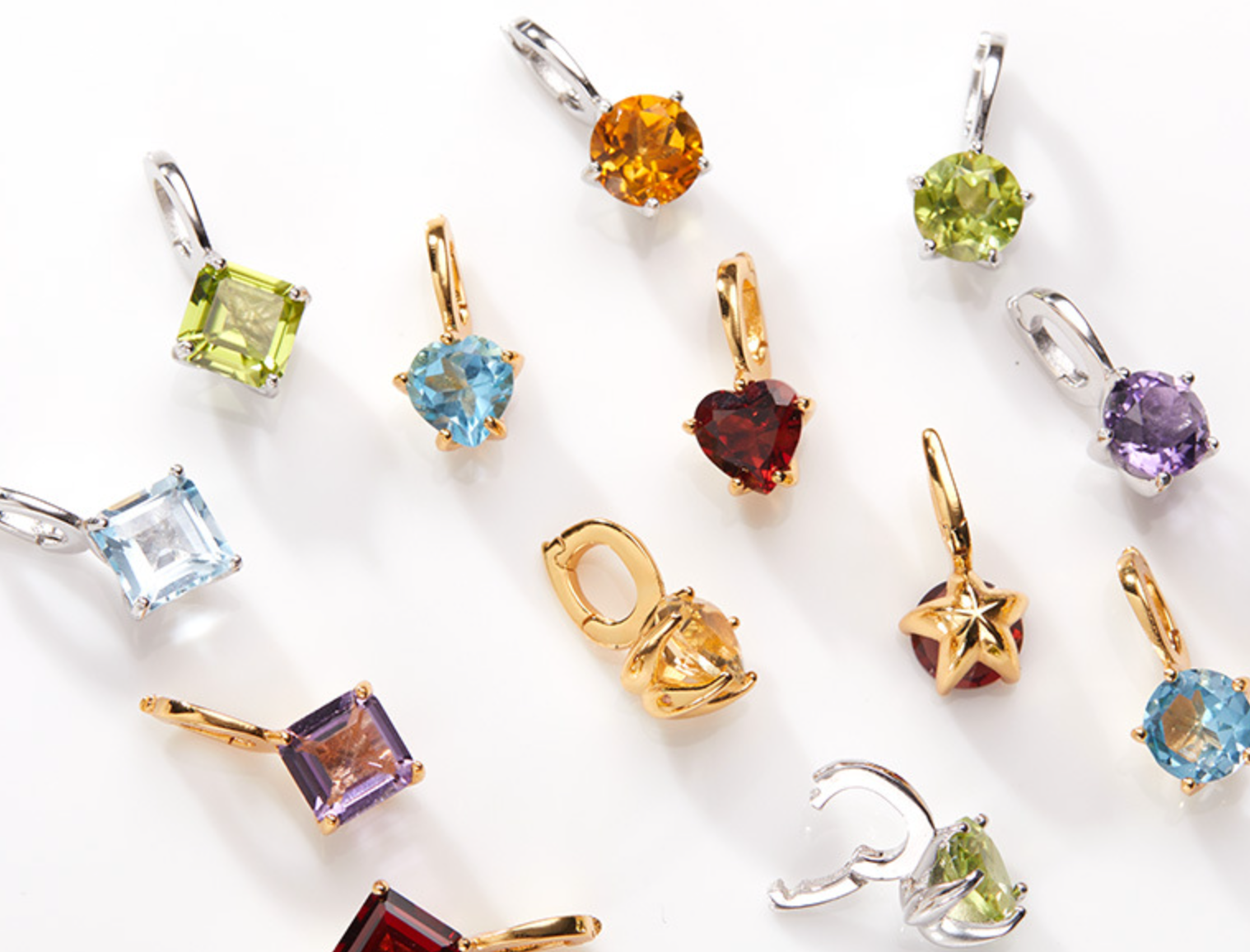
Plenty of growing jewelry brands have a sharp creative eye but no in-house CAD designer, no 3D rendering software, and no spare hours to learn either. That’s not a weakness — it’s a stage of the business. What it does mean is that the brand needs a manufacturing partner who can carry the design load, not just press the button on production. Knowing how to find a jewelry manufacturer with real design support is what separates a brand that scales from one that stalls at the sketch stage.
What Design Support Actually Looks Like?
A jewelry manufacturer that says “we offer design support” can mean wildly different things. Here is what the phrase should cover when it’s the real deal:
- CAD Modeling: Translation of a hand sketch, a reference photo, or a vague brief into a precise, manufacturable 3D file with proper tolerances.
- 3D Rendering: Photoreal renders that let a brand approve looks, marketing visuals, and color stories before any metal is poured.
- Sampling from Sketches: A direct path from rough drawing to a physical prototype — no demand for the brand to deliver a finished CAD file first.
- Trend-Based Product Development: A factory team that watches market trends and proposes designs proactively, not just one that copies what’s emailed in.
- Custom Mold Creation: In-house mold-making so each design becomes a repeatable, scalable product rather than a one-off.
- Reverse Engineering: The ability to take an existing piece, target retail price, or competitor product and re-engineer it for your specs and margin.
If a supplier can’t tick all six, the brand will end up paying a freelance CAD designer on the side — which defeats the whole point of working with custom jewelry manufacturers in the first place.
Where to Look for a Jewelry Manufacturer?
Sourcing channels matter just as much as capability:
- Trade shows like Hong Kong International Jewellery Show, JCK Las Vegas, and Vicenzaoro, etc. remain the strongest places to meet factory representatives face-to-face and feel the quality of physical samples.
- B2B platforms such as Alibaba, Global Sources, and Made-in-China cast a wider net but require more vetting. Industry referrals from peer brands, jewelry consultants, and trade associations tend to deliver the highest-quality leads.

Once a shortlist exists, contact methods follow. Most jewelry manufacturers list:
- A direct phone line
- A WhatsApp number
- An email address
- An inquiry form on their website
A quick test: drop a brief through every available channel and see which one responds fastest with substance — that response speed is a preview of how the entire partnership will run.
What to Ask Jewelry Manufacturers Before You Sign?
Marketing copy is cheap. Probing questions are how a brand finds out whether a factory’s design team actually fits. 5 worth asking on every first call:
- Cost & Revisions: “Are CAD fees rolled into the production cost, and how many revision rounds are included?”
CAD work can quietly become the most expensive part of a project if every tweak triggers a new invoice. A first design rarely lands perfect — buyers usually need two or three rounds before approval. Factories that bury per-revision charges in the fine print can turn a $200 mold into a $2,000 surprise. The right jewelry manufacturing partner either folds CAD into the production cost or quotes a flat package with a defined revision count, so the brand knows the ceiling before work starts.
- Value Engineering: “Can your team reverse-engineer a design to hit a specific target retail price or metal weight?”
Most brands don’t design backwards from margin — they design what looks good and hope the cost lands. A factory worth its salt can take a finished sketch, identify the gold weight that’s eating the margin, propose a hollow construction or a thinner shank, and rebuild the design around the price point. Without that capability, the brand either eats the margin or kills the design. With it, the brand gets both.
- Timeline: “What is your standard lead time from initial sketch submission to the delivery of the first physical prototype?”
Time-to-market is everything in jewelry, especially for seasonal launches and trend-driven drops. A factory that quotes “around a month” without breaking down each stage usually has no real process — which means the brand’s launch date is at the mercy of the factory’s other clients. A serious answer sounds like 24-48 hours for quotation, 72-96 hours for 3D drawings, then 3-15 business days for the first sample. Specific day counts are evidence that the team has run the process hundreds of times.
- Communication: “Will I be communicating directly with a CAD designer, or passing notes through a sales rep?”
Design feedback loses about 30% of its meaning every time it gets relayed through a middleman. A subtle prong angle or a half-millimeter band thickness change is hard enough to describe to the person making the file — describing it to a salesperson who then describes it to the designer is a recipe for three wasted sample rounds. Direct designer access shortens the loop, kills miscommunication, and is one of the strongest predictors of a smooth project.
- IP protection: “Who owns the final CAD files and the master rubber molds once paid for?”
This is the question that protects the brand’s entire future. If the factory keeps the molds, the brand is locked in — switching suppliers means starting from scratch. Worse, some factories quietly resell popular designs to other clients in different markets, and the original brand only finds out when a knockoff shows up on Amazon. A clear written agreement that the brand owns the CAD files and master molds after final payment is non-negotiable, and a signed NDA before any sketches change hands is the bare minimum.
How Star Harvest Answers These Questions?
Operating since 2005, Star Harvest specializes in OEM/ODM production for brass, stainless steel, and 925 silver, supported by a design and R&D team with over 20+ experience. Run the five questions above past the factory, Star Harvest can deliver:

- CAD work is folded into the OEM service. A formal quotation is issued within 24-48 hours of receiving a brief, with FOB unit price, mold fee, and MOQ all spelled out upfront.
- The R&D team performs DFM (Design for Manufacturing) analysis on every project, with structural engineering optimization to hit target weight, cost, and durability — exactly what reverse engineering for a target retail price requires.
- A 3D engineering drawing with tolerance analysis arrives within 72-96 hours, and the first physical sample lands within 3-15 business days. For brass, the full development cycle runs 18-22 days; for 316L stainless steel, 12-15 days.
- Each OEM project is run by a dedicated cross-functional team — engineering, production, and QC — that communicates directly with the brand instead of routing notes through a sales layer.
- An NDA is signed before any design evaluation, and OEM projects run on independent production lines. Once an order is completed, the design files are delivered to the customer.
Contact Star Harvest is easy. You can:
- By phone and WhatsApp(+86-769 8538 6106);
- By email (Sales6@starharvestcn.com), or
- The inquiry form on https://www.starharvestcn.com/contact/
Conclusion
Knowing how to find a jewelry manufacturer with serious design support comes down to asking the right five questions and matching the answers to your brand’s stage and ambitions. Pick a partner whose design team treats jewelry customization as engineering — not as decoration — and the rest of the production journey gets a whole lot smoother.