
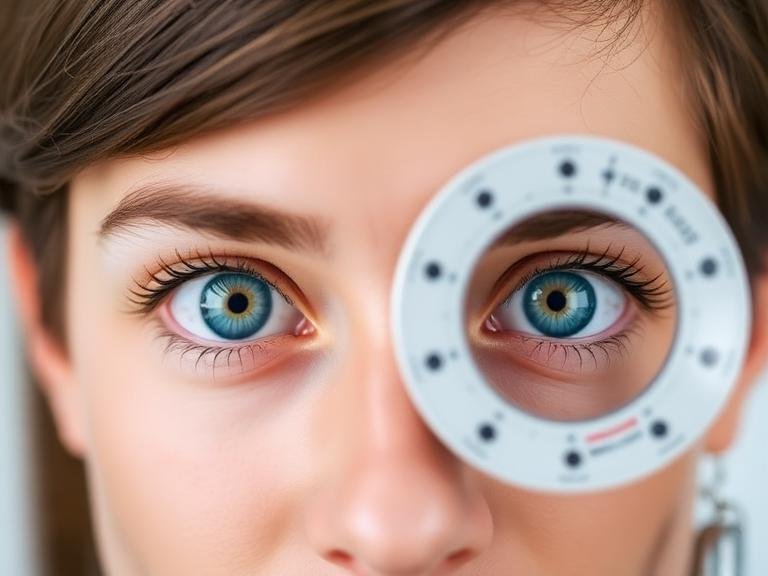
After years of practicing, Dr. Brett Mueller noticed that people often search for an ophthalmologist in Fort Worth after months of squinting, coping, and saying, “It’s probably nothing.” People also search for it when they feel totally fine and want to keep it that way. The National Eye Institute says many eye diseases have no symptoms or warning signs, and that a dilated eye exam is the only way to know for sure whether a problem is already developing. [1]
“Fine” is not a diagnosis (why symptoms come late)
Eye disease often develops quietly. Glaucoma usually has no early symptoms and can damage the optic nerve before you notice any change. [2]
Cataracts may have no early symptoms, either, then later show up as faded colors, light sensitivity, and trouble seeing at night. [3]
Age-related macular degeneration can also begin without early symptoms before central vision becomes obviously “off.” [4]
Symptoms are an unreliable screening tool, and vision loss is a terrible first signal.
What an ophthalmologist does that other visits cannot
For general eye care, either an optometrist or an ophthalmologist can provide a comprehensive dilated eye exam. But the National Eye Institute notes that for serious eye problems, an ophthalmologist may offer treatments such as surgery that optometrists do not, and some ophthalmologists specialize in diseases like glaucoma or diabetic retinopathy. [5]
The most valuable eye visit is often the one that explains what was ruled out, not only what was found.
The tests that catch problems early (before you feel them)
A proper medical eye exam relies on structure, not guesswork. The National Eye Institute describes a dilated exam as including visual acuity testing, visual field testing, pupil testing, tonometry, and dilation to look for disease inside the eye. [1]
When OCT is added, it can reveal macular pathology that may be invisible on a standard clinical exam. This helps prevent postoperative “visual surprises.” [6]
But OCT also has limitations: artifacts, segmentation problems, and overreliance on automated output can mislead if scans are not reviewed carefully in context. [7]
Better imaging creates better decisions, and better decisions protect your future self.
When to book an exam, even if you hate appointments
An exam matters when something changes. It also matters when nothing seems to change, because “stable” is something you prove with baseline measurements, not something you assume. The National Eye Institute says to see an eye doctor if you think you may have an eye disease, if your vision is blurry even with glasses or contacts, or if your doctor says you need a dilated eye exam. [5]
And in chronic eye disease, the follow-up plan has to be realistic: a PubMed-indexed study found that adherence to recommended glaucoma follow-up can be low, with younger and very elderly patients and those on fewer medications less likely to return as advised. [8]
The best eye care plan is the one you can realistically follow.
What to bring to your visit (so you get real answers)
Visits go better when the story is clear. The National Eye Institute’s guide to finding an eye doctor specifically recommends writing down your questions before the appointment. [5]
Bring your questions in plain language, a short symptom timeline, and whatever helps you describe what changed and when. The best question is the one that makes the next step specific.
Cost and insurance talk that feels straightforward
Money questions are health questions when they affect access. The National Eye Institute’s eye-doctor guide even includes a section on help paying for eye care, which is a good reminder that cost belongs in the conversation. [5]
Shared decision-making research in eye care also notes that treatment planning should take lifestyle and health care cost management into account, rather than treating cost as an awkward afterthought. [9]
Your next step should feel calm
Eye care starts with measurement and ends with a plan you can repeat out loud. If your plan feels confusing, it is not finished yet. A good first step is a comprehensive eye exam that tells you what was ruled out, what needs monitoring, and when you should be seen again. [1][5]
References
[1] National Eye Institute, “Get a Dilated Eye Exam,” November 26, 2025.
[2] National Eye Institute, “Glaucoma,” November 26, 2025.
[3] National Eye Institute, “Cataracts,” November 26, 2025.
[4] National Eye Institute, “Age-Related Macular Degeneration (AMD),” June 22, 2021.
[5] National Eye Institute, “Finding an Eye Doctor,” December 10, 2024.
[6] Cheryl Guttman Krader, “Pre-cataract surgery OCT means happier patient outcomes,” October 27, 2017.
[7] Lynda Charters, “OCT artifacts and pitfalls: In the eye of the beholder,” January 26, 2020.
[8] Scott J. Fudemberg, Brian Lee, Michael Waisbourd, Rachel A. Murphy, Yang Dai, Benjamin E. Leiby, and Lisa A. Hark, “Factors contributing to nonadherence to follow-up appointments in a resident glaucoma clinic versus primary eye care clinic,” January 8, 2016.
[9] Jingyao Dai, Yiting Hua, Yijie Chen, Jiali Huang, Xiaoxian Zhang, Yiwen Sun, Chen Chen, Yanyan Chen, and Kaijing Zhou, “Current Status of Shared Decision-Making in Intraocular Lens Selection for Cataract Surgery: A Cross-Sectional Study,” June 24, 2024.