
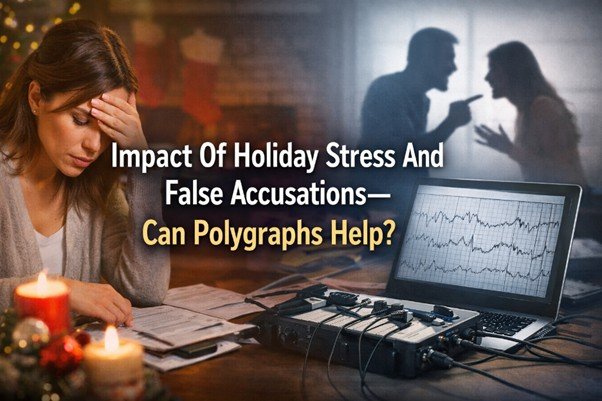
The holiday season is expected to be a time of celebration and bonding. But in the real world, it usually causes pressure.
Financial pressure mounts, expectations grow, and family pressures reappear. As a result, minor misconceptions can grow at a rapid pace. In stressful situations, judgment is distorted, and words are misunderstood.
Consequently, accusations are made when frustrated. In some cases, such charges may have severe outcomes, including ruined relationships, inquiries in the workplace, or even legal issues. Fact can be subordinate to perception when the emotions are strong. Thus, transparency is essential.
In situations where facts are disputed, structured tools such as polygraph examinations may be considered. By measuring physiological responses to carefully constructed questions, polygraphs introduce standardized procedures into emotionally charged conflicts.
This article discusses the role of holiday stress in causing false accusations and whether polygraph examinations can be incorporated to regain objectivity and truth.
Holiday Stress Intensifies Conflict and Misinterpretation
Emotional regulation is impaired during the holidays. Cumulative stress is created by increased expenditure, family demands, and travel exhaustion. Consequently, responses are more acute, and assumptions are made more quickly.
Trust can be destroyed at once when something is lost. Blame can come soon after arguments break out. At this point, an official lie detector test is occasionally viewed as an organized method of establishing credibility.
Nevertheless, it is worth knowing why accusations increase during this season before rushing to solutions. Stress increases the level of cortisol, which influences impulse control and reasoning. As a result, people can accuse others without full information.
Moreover, meetings unite individuals who might already have unresolved conflicts. Consequently, old suspicions may recur. Due to the emotional nature of the environment, even small events can seem big.
False Accusations Carry Psychological and Practical Consequences
Even a false accusation can change relations forever. Doubt remains once trust is questioned. Furthermore, reputational loss is contagious, especially in small communities or workplaces.
Psychologically, a false accusation causes anxiety, frustration, and the urge to defend oneself. Ironically, this defense position can be wrongly interpreted as suspicious conduct.
As a result, the cycle deepens. In the workplace setting, internal investigations can be triggered by accusations. These processes are invasive and long. Consequently, employees can be suspended or subjected to disciplinary action. Stigma may persist even when discharged later.
The effect can be even more complicated in a family, where emotional attachment is involved. Emotional bonds are at stake. Arguments on theft, infidelity, or unacceptable behaviors during the holiday may ruin years of relationships.
Thus, it becomes necessary to address allegations promptly and impartially. In the absence of a systematic way of verification, conflicts usually go unaddressed.
Why Emotional Evidence Is Not Reliable Evidence?
When stress is high, people rely heavily on intuition. They assume body language as a signal of deception. They interpret silence as guilt and nervousness as dishonesty.
However, physiological stress responses are observed in both truthful and deceptive individuals. Someone who has been falsely accused may show an increase in heart rate, sweating, or hesitation, not because they are lying, but because they are under pressure.
This is exactly the reason why structured assessments of credibility exist. Polygraph examinations are not based on surface impressions. Instead, they quantify physiological responses in relation to carefully-structured questions.
Additionally, the testing process involves a pre-test interview. In this stage, questions are reviewed and clarified. This reduces ambiguity as well as ensures that the subject understands what is being asked.
As such, the goal is standardization rather than intimidation. By using a consistent methodology, subjective judgment is replaced with measurable data.
How Polygraph Examinations Provide Structured Clarity?
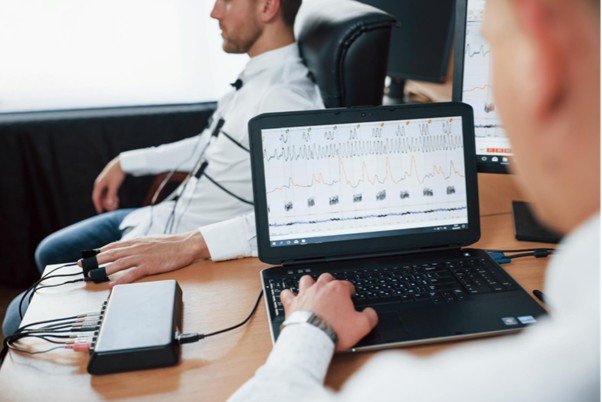
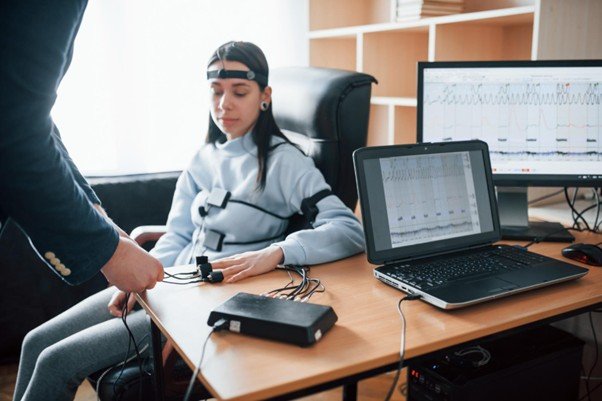
A professional administered polygraph examination is conducted in a defined protocol. First, the examiner describes the procedure and obtains informed consent. Then, a baseline for physiological measurements is made. During the testing, multiple sensors are used to record respiration, cardiovascular, and electrodermal activity. The questions are presented in a comparison format.
As a result, examiners are able to analyze patterns and not individual reactions. Importantly, the examination does not work as a yes or no trigger.
Instead, it assesses steady physiological alterations through relevant questions. The data is then scored using validated techniques. Furthermore, post-test analysis ensures results are interpreted using the standardized criteria, which helps reduce examiner bias.
Because of this structured approach, polygraph examinations are frequently employed in work-related investigations, relationship disputes, and legal defense applications. They are an additional investigative tool rather than a replacement for evidence. When accusations have no clear proof, structured testing can serve as a path to resolution.
When Is Polygraph Appropriate in False Accusation Cases?
Not all disputes are subject to a polygraph. However, in situations where reputational damage is imminent and facts are still disputed, testing may act as a stabilizing mechanism.
For instance, allegations of workplace theft during periods of high holiday operations need to be quickly resolved. The employers aim to preserve assets, whereas employees aim to preserve their integrity.
Similarly, relationship disputes, especially those involving allegations of infidelity, often get heated during times when everybody is together for the holidays.
Final Thoughts
Holiday stress increases emotion and decreases objectivity. As a result, misunderstandings may turn into serious accusations. Once the trust is in question, resolution is an urgency. While for many people, emotional intuition is the cause of disputes, structured investigative tools provide measurability and clarity.
Polygraph examinations, when conducted with standardized procedures, can be used to provide an additional level of credibility in complex situations. The trick is in timing and professionalism. When used strategically, they have the ability to turn a conflict from a guess to a structured evaluation.