
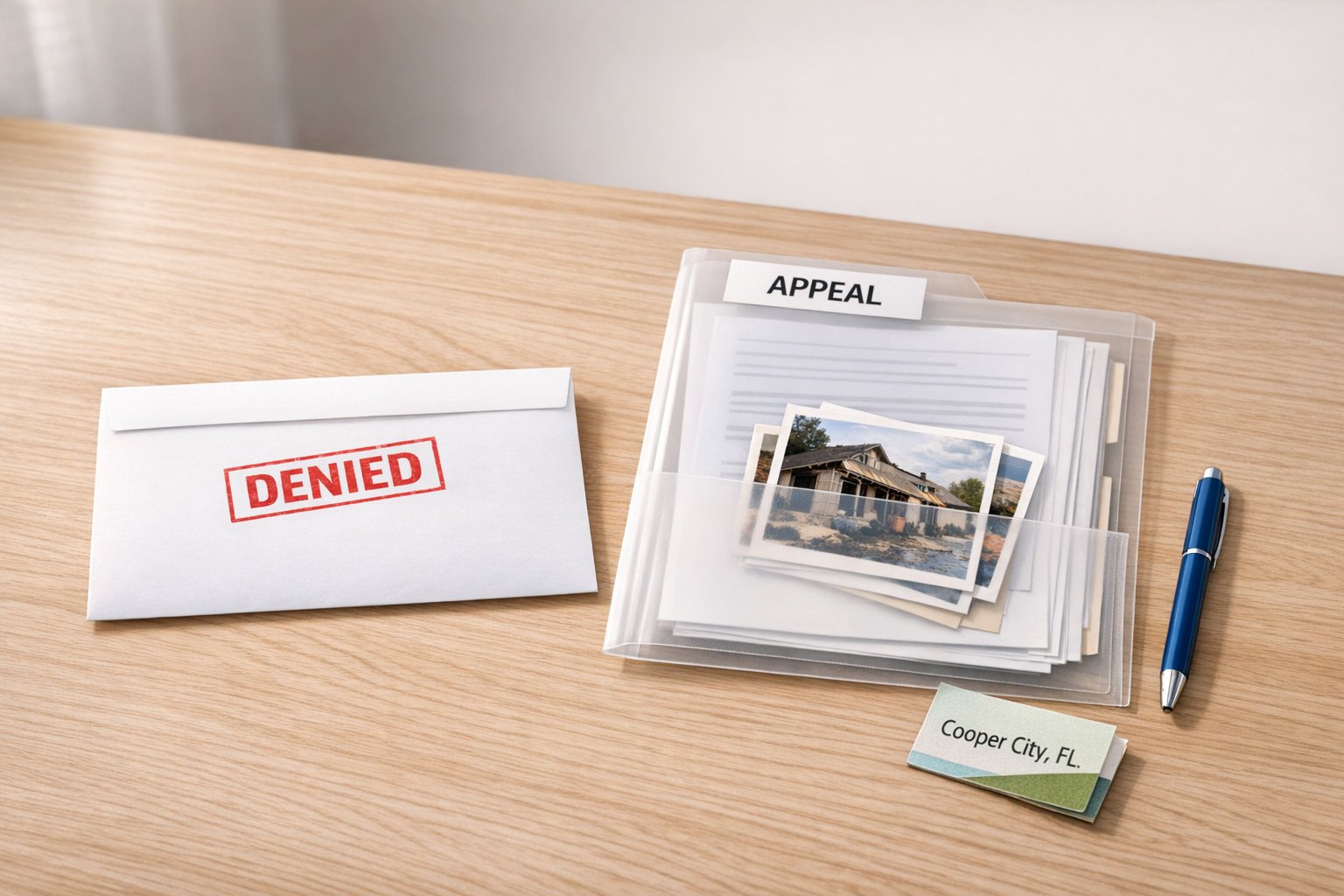
A denial letter isn’t the end of a claim. It’s the insurer’s first position, and plenty of denials get reversed or turned into partial payments once the policyholder pushes back with the right evidence. Homeowners in Cooper City and the rest of Broward County see more than their share of denials after storms, roof leaks and water damage. This guide explains how to appeal one step by step.
If the claim is large or the policy language is confusing, it can help to talk with a public adjuster in Cooper City, FL early. A public adjuster works for you, not the insurance company, and can re-document the loss independently. Either way, the steps below apply.
Step 1: Find Out Exactly Why You Were Denied
Read the denial letter line by line. It should name the specific policy language the insurer is relying on. For a homeowners insurance claim in South Florida, the usual reasons are:
- Wear and tear or “long-term” damage. This comes up constantly with roof leaks. The insurer says the roof was failing before the storm.
- Exclusions. Flood is excluded under standard policies, and repeated seepage is often limited too.
- Late notice. Florida law now generally requires new property claims to be reported within one year of the date of loss.
- Missing documentation or a dispute over how much the damage is worth.
If the letter is vague, ask the insurer in writing for the specific provision it relied on and a copy of the adjuster’s report and photos. Writing a clear, formal request like that is how you respond more effectively than a phone call ever will, and it creates a record.
Step 2: Build Your Evidence File
Your appeal should answer the denial reason directly. If they said “pre-existing wear,” you need evidence of sudden storm damage. Useful items include:
- Dated photos and video of the damage, ideally including “before” photos from an earlier inspection or a listing
- A written opinion from a licensed roofer, plumber or engineer on what caused the damage
- Weather data showing wind speeds or rainfall on the date of loss
- Receipts for emergency repairs like tarping or water extraction
- A timeline of every call, email and inspection with the insurer
Don’t throw away damaged materials until they’ve been photographed and, if possible, inspected. Once the evidence is gone, it’s your word against theirs.
Step 3: Write and Send the Appeal
Address the appeal letter to the claims department and include your policy and claim numbers. Respond to each reason in the denial, quote the policy sections that support coverage, and list every attachment. Keep the tone factual. Anger doesn’t move adjusters, but documentation does. Send it in a way you can track, and keep copies of everything.
If the insurer won’t budge, Florida gives you other options. You can request free mediation through the Florida Department of Financial Services for many residential property disputes. Your policy may also include an appraisal clause for disagreements over the amount of the loss. For complicated claims, firms like PICC public adjusters can handle the re-estimate and negotiation. Florida caps public adjuster fees, generally at 10% for claims tied to a declared emergency in the first year and 20% otherwise, so ask for the exact percentage before you sign.
Mistakes That Sink Appeals
- Inconsistent stories. Dates and details should match across every email, letter and phone call. Adjusters look for contradictions.
- Missing deadlines. Your policy and Florida law both set time limits, and reopened or supplemental claims have their own shorter window.
- Skipping steps the policy requires. Not following every condition, such as a sworn proof of loss or an examination under oath, gives the insurer an easy reason to deny again.
South Florida homeowners live with weather-related risk every year, so the habits that help you win an appeal will also help with the next claim: photograph your home before storm season, keep receipts for maintenance and upgrades, and read your policy’s duties section before you ever need to use it.